Spring, TX Personal Safety Essentials: condition1combat.com self defense classes
Spring moves at a comfortable pace. Neighborhood parks fill on weekends, and the local shops feel familiar. That calm can make it easy to forget a basic truth about personal safety: you do not rise to the occasion, you fall back on your training. Skill, not luck, carries you through the five seconds that matter. If you live or work in Spring, TX and you have been thinking about getting ready for those moments, starting with practical self defense training is the most reliable route. Good instruction blends mindset, movement, and decision making in a way that sticks.
I have coached adults who simply wanted to feel steadier when walking to a car at night, and I have worked with kids who needed confidence as much as technique. The gap between theory and application is where most people get tripped up. The fix is not complicated, but it does take thoughtful repetition and a school that prioritizes pressure-tested skills over choreography.
What effective self defense looks like in real life
Distance, direction, and decision are the core of real personal safety. Distance is space control, the buffer you keep so someone cannot casually put hands on you. Direction is angle management, how you move your body relative to a threat to reduce their power and increase your options. Decision is your choice architecture under stress, from verbal boundaries to whether you escape, de-escalate, or fight.
In practice, this means you learn to notice the weight shift before a punch, how to use your forearm to frame and create space when someone grabs you, and how to move your feet so you are not standing on a railroad track when you should be stepping off at 45 degrees. Good training burns those patterns deep enough that they survive adrenaline.
Condition 1 Combat Center, reachable at condition1combat.com, focuses on these usable fundamentals. The self defense classes at condition1combat.com are built around scenarios residents in Spring actually encounter: parking lot approaches, shoulder grabs in tight hallways, clinch range problems when an argument turns physical, and ground escapes when you are pinned against a hard surface.
The Spring, TX backdrop and why it matters
Local context shapes risk. Harris County and the North Houston corridor carry the typical suburban mix of low-level property crime, occasional robberies, and a share of domestic disputes. Parking lots near busy retail, gas stations late at night, and large event venues can produce the kind of proximity where confrontations start. None of that means you should move through life jumpy. It means your habits should be calibrated to the environment.
I have seen small adjustments pay off. Park where you can see and be seen. When you walk, head up and shoulders set, phone away until you are inside. If someone invades your personal bubble with a flimsy pretext, break eye contact only briefly, blade your stance slightly, and put a verbal boundary in place early. You want your nervous system to recognize these cues as normal, not novel, so you do not freeze.
Drills that change how you move
If a class still looks perfect at full speed, it is probably not honest training. You want techniques that get a little ugly when energy goes up, yet still work. Here are a few training patterns I like to see in any program, including the martial arts classes at Condition 1 Combat Center:
- Reaction line drills where one partner tries to breach distance with a grab, and the defender practices framing with the forearm, pivoting the hips, and exiting along a diagonal. Keep the talking realistic. Short, plain language cues help organize your brain under stress.
- Off-balance striking, such as throwing palm strikes after taking a bump backward, then recovering stance. Fights rarely start in perfect posture.
- Wall work, where you learn to manage pressure with your back against a surface. Focus on chin tuck, hip turn, underhooks, and shifting the opponent’s weight away from the wall to buy a lane of escape.
- Ground get-ups under light resistance. The technical stand-up is a must. You learn to strike from the ground if needed, create knee shield frames, and get vertical without giving your back.
- Low-light navigation, even if it is just dimming the lights and doing a two-step scan before you enter a doorway. This shows up in parking lots far more often than ring-style exchanges.
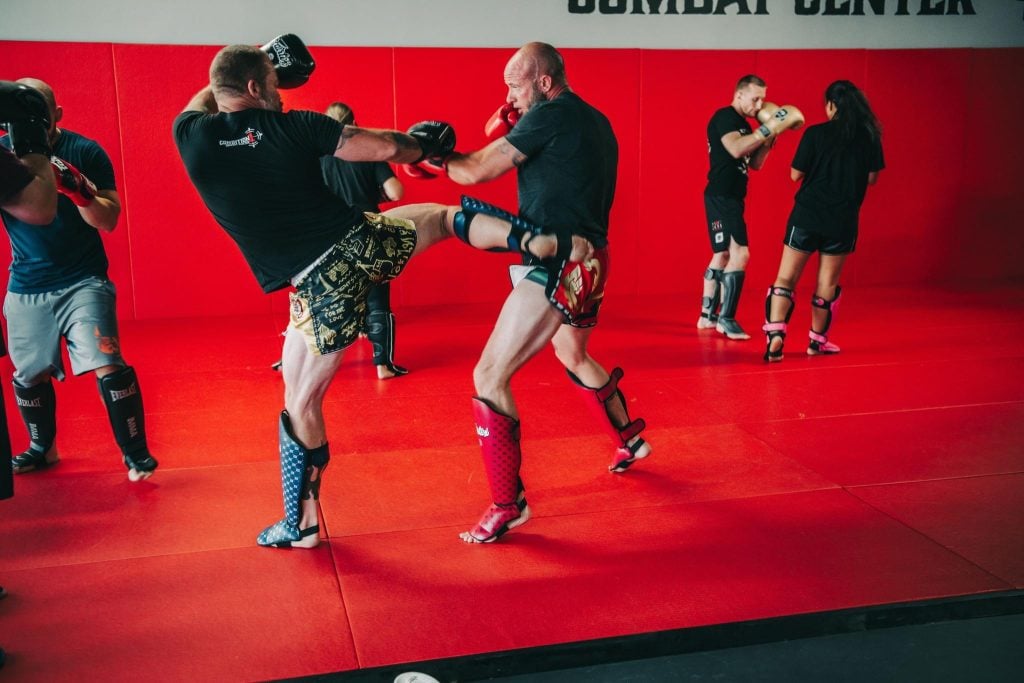
Condition 1 Combat Center martial arts classes normally integrate this kind of positional work with striking and clinch mechanics. The emphasis is not on racking up combinations for the pad holder. It is on creating enough disruption to leave.
Striking that fits self defense, not point fighting
You do not need a catalog of punches and kicks. You need tools that land under pressure, even when space is tight and your hands are shaking. A palm strike find out more saves wrists and travels well in close quarters. Elbows are short and powerful. Knees do not require much wind up. A low kick to the thigh or calf can kill a pursuer’s speed without risking a slip on rough pavement.
In the self defense classes at condition1combat.com, you will see these mechanics taught with context. For example, the elbow is not a standalone trick. It comes after you frame a shoulder and pivot, or when you break a collar tie. The knee is not spammed from static clinch. It appears after you off-balance the opponent and pull their posture onto your strike.
People ask me where boxing fits. Boxing footwork and head movement matter a lot. The guard is different for self defense. Hands tend to be higher and open, more fence than shell, because we need to intercept and manage grabs. But the rhythm and jab timing from boxing cross over beautifully.
The quiet power of grappling literacy
You do not have to love the ground to respect it. Most real altercations include collisions and scrambles. If the only plan is to punch harder, clinch range will tax your lungs and your confidence. A touch of wrestling and jiu-jitsu fixes that.
Here is what that looks like in practice. You learn to pummel for inside control so you can break grips, to hit a snap down and circle off rather than fight square, and to stand up safely after a knockdown. On the ground, your first lessons are posture, frames, and getting to a knee. Submissions are taught, but the priority is escape. In kids martial arts programs, those escapes build body awareness and emotional control more than anything else.
Condition 1 Combat Center adult martial arts training spends time on this literacy. The mat is where you discover you can breathe through pressure and make decisions with someone’s weight on you. That discovery carries over to every other part of your life.
Mindset and boundary setting you can actually use
A plan that starts with striking can miss the front end of a confrontation. Most problems announce themselves early in the form of space invasion, unwanted touch, or conversational hooks. You need phrases you can deploy without thinking: short, firm, boring. I coach adults to use language that signals commitment rather than emotion.
Try this: “That’s close enough.” Then step off line and set your hands like you are about to catch a ball at chest height. If the person keeps closing, “I can’t help you.” Then move. If a hand reaches, attack the arm with a hard frame, not the face with a hopeful punch. Faces are small targets, and fists break on teeth. Arms are big targets. Breaking structure breaks plans.
With kids martial arts, this boundary work is even more important. You role-play what to say to a pushy peer, how to use a loud voice to attract attention, and when to run to a safe adult. The best kids programs, including kids martial arts at Condition 1 Combat Center, make these drills feel like games while still teaching clarity and conviction.
Legal and ethical basics in Texas
Self defense is a legal concept, not just a physical one. In Texas, you are allowed to use force to the degree you reasonably believe it is immediately necessary to protect against another’s unlawful force. Deadly force has a higher bar and narrower windows. The details change with context, lighting, presence of weapons, and who escalated first. That is why de-escalation and escape are your primary routes wherever possible.

I am not an attorney. Good schools remind students to learn the legal framework that applies to them and to seek legal counsel after a serious incident. Ethical posture matters too. The goal of training is to preserve life and dignity, starting with your own. Hurting someone is not victory. Getting home is.
What to look for in a self defense school
You will know quickly whether a gym is built for performance under pressure or for social media. Observe how they teach distance, how much time they spend in functional positions, and whether students get to solve unpredictable problems. A few questions help separate polish from substance.
- How do you pressure test techniques safely at the end of a cycle?
- What do beginners do in their first month, and how do you prevent injuries?
- How do you teach verbal boundaries and pre-fight indicators alongside physical skills?
- Where do you stand on weapons awareness and improvised tools?
- How do you measure progress besides stripes or belts?
The answers will tell you whether they run a martial arts class, a self defense class, or both. Neither is wrong. You want alignment with your goals. The martial arts classes at Condition 1 Combat Center cover sport and self defense layers, and the instructors make clear when a move is ring-centric versus street-safe.
Adult training that respects time and recovery
Adults come to training with jobs, families, and old injuries. The program has to scale. A solid week for an adult might include two 60 to 75 minute sessions that pair striking with clinch or ground skills, and a short solo session at home that covers footwork, shadow striking, and a couple of get-up reps. Ten minutes of bag work can do more for your confidence than an hour of aimless cardio, if you aim it well.
Condition1combat.com adult martial arts training is designed around that reality. You will sweat, but you will not be fed to the lions. Good coaching knows the difference between pressure and punishment. Expect the instructors to correct your stance, insist on chin tuck and elbow position, and then ramp energy only when you are technically ready.
Kids programs that build more than kicks and punches
Parents do not sign kids up just for fitness. They want resilience, discipline, and social confidence. The best kids martial arts programs, including those at Condition 1 Combat Center, focus on three threads. First, body control, which includes breakfalls, balance games, and grip fighting that feels like play. Second, voice and boundary setting. Third, respect in motion, where students practice taking turns, helping partners up, and resetting when they get frustrated.
Belt systems can be useful when they represent skill and behavior, not attendance. Ask how stripes are awarded. Look for feedback that tells your child what they did well, and what they should practice before next week. Good kids classes end with a quick debrief so children learn how to talk about effort and improvement.
Simple gear and daily habits
You do not need a trunk full of gadgets. Essentials are boring on purpose. Keep your kit stripped to what you will actually carry or use.
- A small, high-lumen flashlight with a tail switch, plus a spare battery at home
- Footwear you can run in for your daily routine, at least 3 days a week
- A low-profile tourniquet staged in your vehicle or bag, if trained to use it
- A phone with emergency contacts favorited, and a charged power bank
- A mouthguard and hand wraps in your gym bag so you never skip contact rounds
Habits make these items useful. Practice drawing your flashlight while walking from your car to your front door. Move your bag to your non-dominant shoulder in transitional spaces to keep your dominant hand free. Run your emergency contact shortcut once a month so muscle memory stays fresh.
Scenario thinking that sharpens judgment
People who train see more. They notice the individual who is loitering without purpose, the odd angle of a car door left ajar, the way a person scans for witnesses before closing distance. This awareness is not paranoia. It is pattern recognition.
Build it with small games. When you sit for coffee in Old Town Spring, pick one entry and one exit route, then check if either gets crowded as the hour changes. When you fuel your car, position the vehicle so you have a forward lane to leave. If someone approaches with a story that requires you to look at your phone or a paper, move them to your non-dominant side and increase distance before you respond.
In class, ask for scenario rounds. A partner plays a persistent panhandler who shifts abruptly to anger. You practice verbal boundaries, then a tactile response when they breach. Another round starts with you seated, buckled in a parked car, when a knock on the window escalates to a door pull. You practice starting the vehicle, blasting the horn, and leaving, rather than defaulting to a fight.
Conditioning that supports skill, not the other way around
Many programs flip this. They try to out-fitness the problem. Fitness matters, but it must be specific. Think intervals that mimic the work of a short scramble. Ten to twenty seconds of maximal effort striking or pummeling, followed by a controlled exit and a reset of breathing. Three to five rounds of that kind of work will expose technical leaks and stress recovery patterns.
Grip strength, hip mobility, and posterior chain endurance support most self defense tasks. Farmer carries and deadlifts build carry power and posture. Hip airplanes and Cossack squats help you step off line without wobbling. Add jump rope for foot rhythm and breath control. Keep it simple enough that you can do it two or three times a week without dreading it.
How condition1combat.com integrates the pieces
Condition1combat.com martial arts classes are not siloed. Striking links to clinch. Clinch links to ground. Every piece ties to decision making and escape. On-ramp classes teach protective posture, situational awareness, and a small set of power lines that show up in every technique. Regular cycles revisit core escapes and strikes so beginners can plug in anytime.
For adult martial arts training at Condition 1 Combat Center, the path looks like this: first month, you learn to hold a stance that will not fold, to hit with your body not just your arm, and to stand back up from the ground without turning your back. Second and third months, you add clinch literacy and targeted conditioning. After that, you expand into scenario rounds with clear safety protocols. It is a build that respects the stress curve and your calendar.
For kids martial arts at Condition 1 Combat Center, classes layer games and drills that secretly teach posture, balance, and escape. Coaches mark progress with clear cues: “You kept your hands up while you moved,” or “You used your words before you pushed away.” Parents can see the link between class behavior and life outside the gym.
Measuring progress without fooling yourself
Progress in self defense is not just faster combinations. It is cleaner decisions and better recovery under stress. A simple way to check yourself every six to eight weeks:
- Record 60 seconds of shadow striking from different angles. Watch for dropped hands and long pauses.
- Run three technical stand-ups per side, then check your heart rate 30 seconds after. Aim for a steady drop as you condition.
- Ask a partner to run three boundary scenarios and give you feedback on language clarity, distance management, and exit choice.
- Do two clinch rounds where your goal is only to get a safe angle and leave. Count how often you default to trading.
- Film one wall escape and look for head position and hip turn. Small corrections pay off fast.
You are building reliable habits. When you can hold structure while slightly out of breath, set a verbal line early, and leave a confined space with control, you are safer in ways that do not require luck.
The path from curious to capable
Most people hesitate before the first class. They worry they are too out of shape, too old, or too busy. I have taught first-timers in their sixties who moved better than they expected because the drills were clear and the goals were real. Busy parents have found that two weekly sessions at a place like Condition 1 Combat Center give them a reservoir of calm that shows up everywhere else.
If you are considering trying self defense classes at condition1combat.com, start with a question or two by phone, then visit. Watch how coaches interact, how the room treats beginners, and whether the training looks like something you could imagine doing consistently. Training works when it becomes part of your week, not an extreme event.
A final word on confidence
Skill changes how a person walks. The shoulders rest a little lower. The eyes scan without darting. You do not become invincible. You become prepared, and that is enough to alter outcomes. A small set of well-practiced tools will beat a long list of techniques you barely remember.
Spring rewards people who show up for their neighbors and for themselves. If you choose to invest in your safety, pick a school that treats that investment with respect. The martial arts classes at condition1combat.com, including adult martial arts training and kids programs, are built for that kind of steady, useful progress. Combine them with simple habits, a short gear list, and regular checks of your own decision making. That is how everyday people become resilient.
And remember the three anchors when it counts: guard your distance, choose your direction, make your decision. Train them until they feel like home.